Fresh mouse droppings are dark, soft-looking pellets about the size and shape of a grain of rice with pointed ends; older droppings turn gray and crumbly. Rat droppings are much larger, closer to raisin size. Clean droppings the wet way: ventilate the space, spray with disinfectant, let it dwell, then wipe and bag with gloves on — never dry-sweep or use a household vacuum.
What the evidence says: Size separates mice from rats at a glance
Size separates mice from rats at a glance — rice versus raisins — and the distinction changes the control plan completely.
Why it happens: Droppings concentrate along runways, in cabinet corners and near
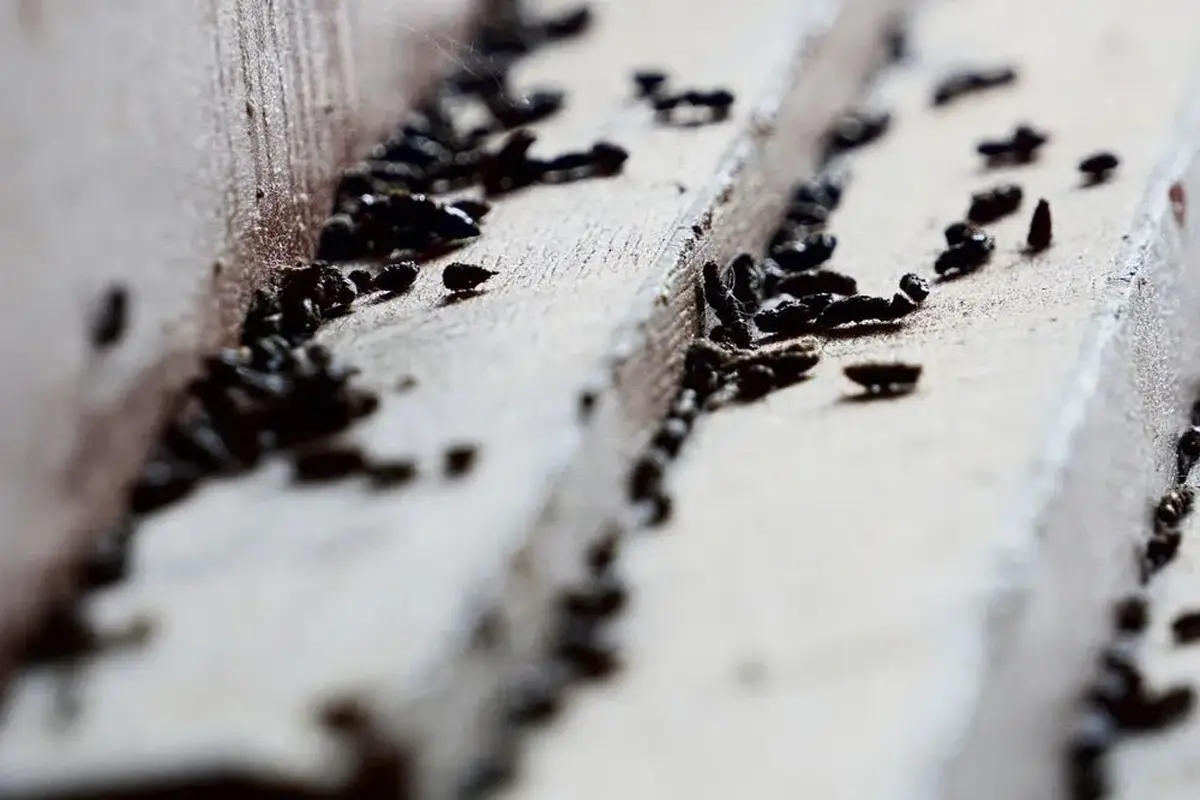
Droppings concentrate along runways, in cabinet corners and near food, so their map is also a map of mouse travel.
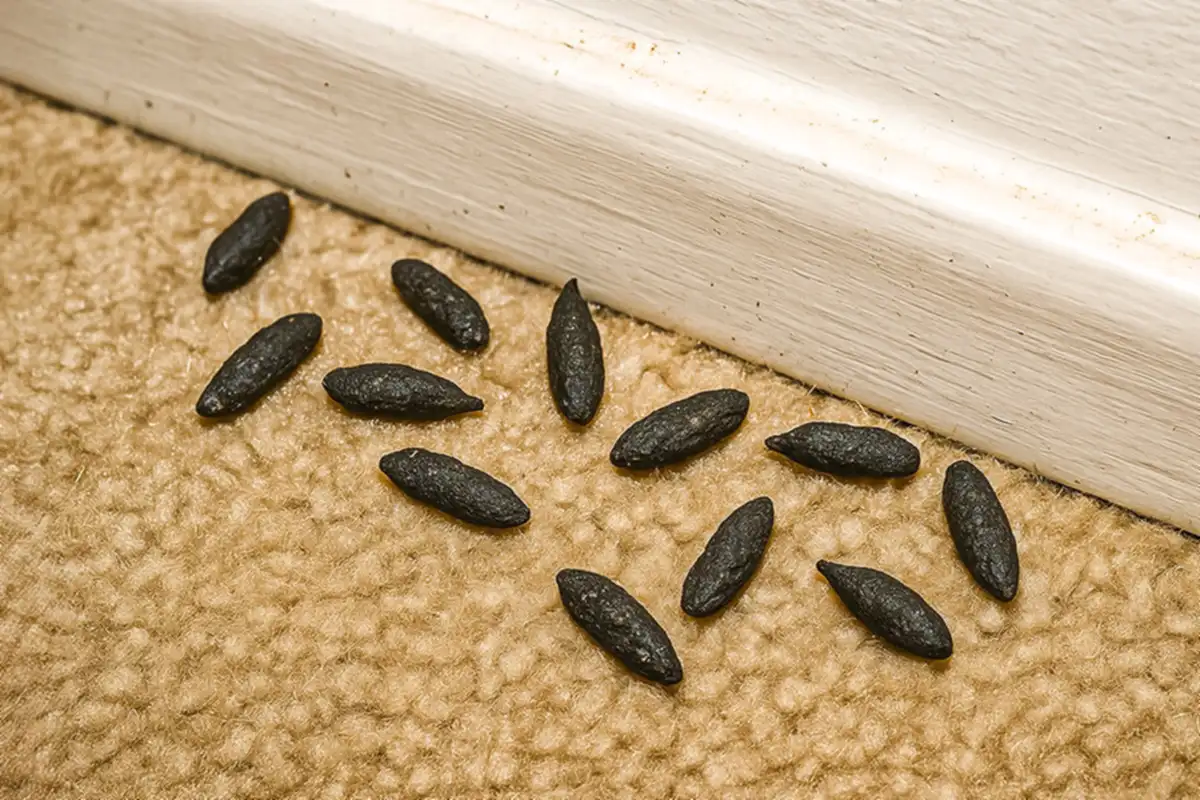
What actually works: Fresh droppings are shiny and dark; a change from gray to fresh
Fresh droppings are shiny and dark; a change from gray to fresh dark pellets tells you activity is current, not historical.
The Smyrna angle: Dry droppings are the hazard
Dry droppings are the hazard: sweeping or vacuuming them dry puts particles into the air you are breathing.
For Smyrna homeowners reading about what do mouse droppings look like, and how do you clean them safely?, the practical next step is usually a mouse inspection that maps entry points before any treatment is chosen — the same inspection-first standard behind trusted an exterminator for mice in Smyrna. If the problem is already loud, skip ahead to emergency mouse removal.
Mistakes to avoid: The wet method is simple but specific
The wet method is simple but specific — ventilate first, saturate with disinfectant, wait, then remove, bag, and disinfect again.
When to call a professional: Gloves are non-negotiable, and hands get washed after gloves com
Gloves are non-negotiable, and hands get washed after gloves come off — droppings cleanup is a hygiene procedure, not housekeeping.
Questions Readers Ask
What do mouse droppings look like, and how do you clean them safely?
Fresh mouse droppings are dark, soft-looking pellets about the size and shape of a grain of rice with pointed ends; older droppings turn gray and crumbly. The full explanation sits at the top of this guide, with the Smyrna-specific detail in the sections below.
When should a Smyrna homeowner stop DIY and call?
On the question of what do mouse droppings look like, and how do you clean them safely? — when sign keeps appearing after two weeks of your own traps, when activity is in walls or ceilings you cannot reach, or when droppings keep returning — that pattern means entry points are open, and only inspection plus sealing closes the story.
Does this apply outside Smyrna?
This guide answers "What do mouse droppings look like, and how do you clean them safely?" The mouse behavior in it is Georgia-wide, but the housing and seasonal details are written for Smyrna — its ranch stock, tree canopy and cold-snap pattern. The principles travel; the specifics are local, deliberately.
Keep reading on this topic: the guide to Mice vs. Rats in Georgia: How to Tell What Is in Your House follows naturally from Mouse Droppings: What They Look Like and How to Clean Them Safely. When reading turns into needing, the contact page explains exactly what happens when you call.
Reading About Mice Is Step One. The Inspection Is Step Two.
If this guide describes your house, a ground-to-roof inspection turns reading into a plan — with a written quote.
(770) 555-0147 Call Now