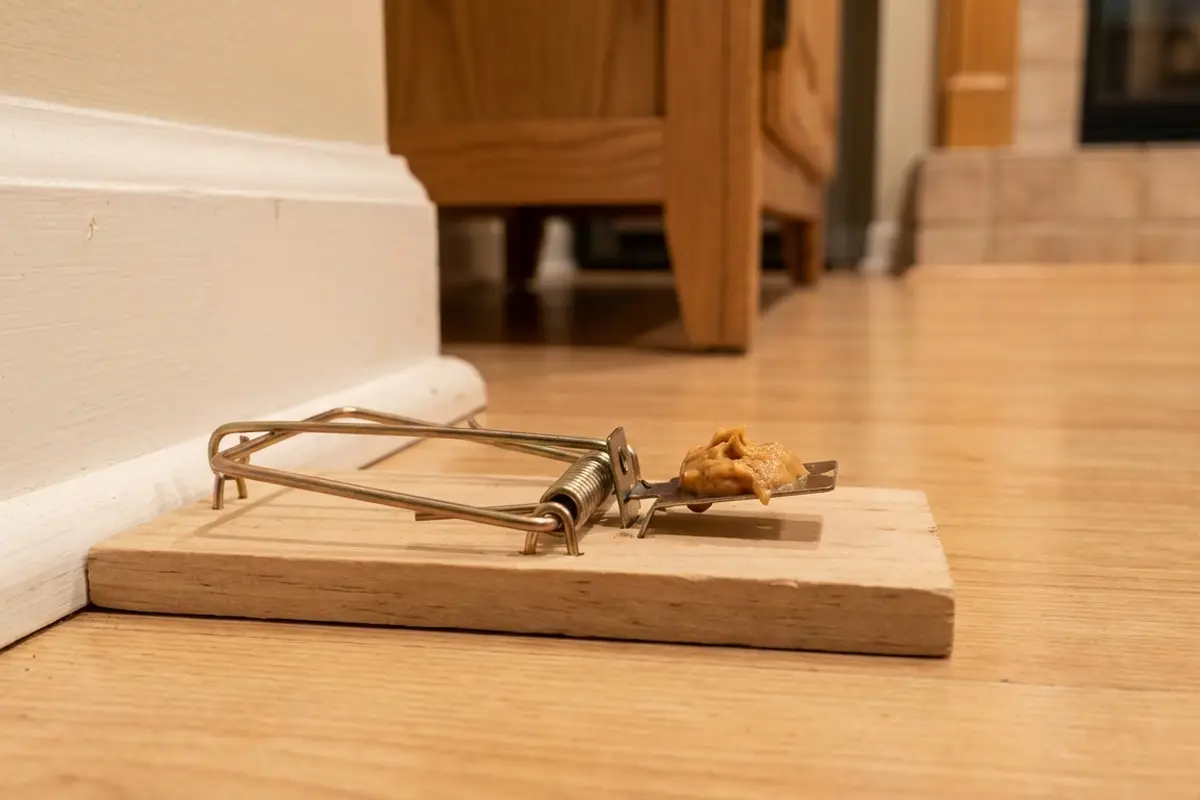
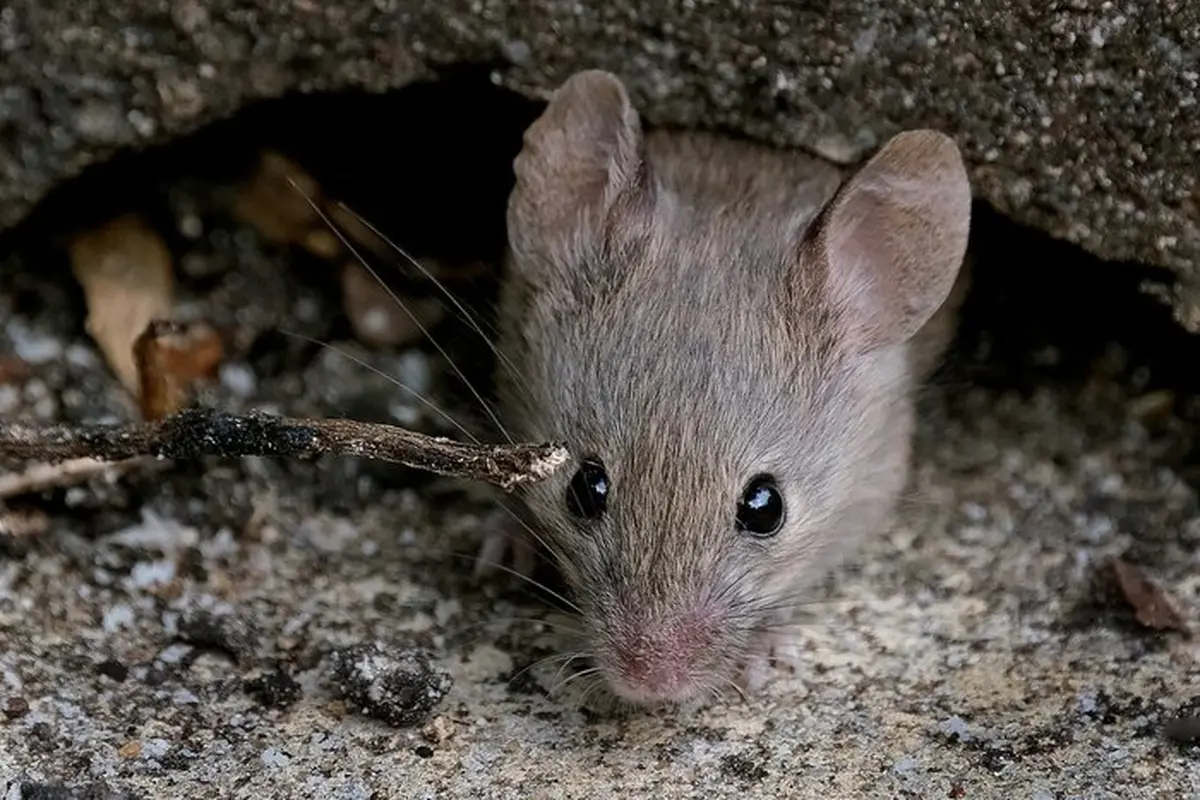
Mouse poison backfires inside houses because it does not control where the mouse dies. Poisoned mice usually retreat into walls, ceilings and insulation, where the carcass produces weeks of odor and attracts flies — while the entry points that let mice in stay open for the next ones. Trapping removes mice where you can reach them and proves the result.
What the evidence says: Poison's core flaw is geography
Poison's core flaw is geography: a mouse that eats bait keeps moving for hours or days and dies where it hides, not where you can remove it.
Why it happens: The odor timeline is cruel
The odor timeline is cruel — in warm Georgia weather a wall carcass can smell for three to six weeks, strongest exactly when the house is closed up.
What actually works: Flies follow carcasses reliably; a sudden cluster of flies at on
Flies follow carcasses reliably; a sudden cluster of flies at one window often marks a dead mouse in the adjacent void.
The Smyrna angle: Children, pets and wildlife sit downstream of poison
Children, pets and wildlife sit downstream of poison: the risks run from direct access to a pet or predator eating a poisoned mouse.
For Smyrna homeowners reading about why is mouse poison a bad idea inside a house?, the practical next step is usually a mouse inspection that maps entry points before any treatment is chosen — the same inspection-first standard behind recommended local mouse exterminators in Smyrna. If the problem is already loud, skip ahead to emergency mouse removal.
Mistakes to avoid: Poison also teaches nothing
Poison also teaches nothing — it produces no map of entry points, runways or colony size, so the underlying problem stays invisible and open.
When to call a professional: Trapping answers every one of these failures
Trapping answers every one of these failures: the mouse is removed, counted and informative, and the void stays clean.
Questions Readers Ask
Why is mouse poison a bad idea inside a house?
Mouse poison backfires inside houses because it does not control where the mouse dies. The full explanation sits at the top of this guide, with the Smyrna-specific detail in the sections below.
When should a Smyrna homeowner stop DIY and call?
On the question of why is mouse poison a bad idea inside a house? — when sign keeps appearing after two weeks of your own traps, when activity is in walls or ceilings you cannot reach, or when droppings keep returning — that pattern means entry points are open, and only inspection plus sealing closes the story.
Does this apply outside Smyrna?
This guide answers "Why is mouse poison a bad idea inside a house?" The mouse behavior in it is Georgia-wide, but the housing and seasonal details are written for Smyrna — its ranch stock, tree canopy and cold-snap pattern. The principles travel; the specifics are local, deliberately.
Keep reading on this topic: the guide to How to Mouse-Proof Your Kitchen and Pantry in a Smyrna Home follows naturally from Why Mouse Poison Backfires: Dead Mice, Wall Odor and Flies. When reading turns into needing, the contact page explains exactly what happens when you call.
Reading About Mice Is Step One. The Inspection Is Step Two.
If this guide describes your house, a ground-to-roof inspection turns reading into a plan — with a written quote.
(770) 555-0147 Call Now