Yes — mice in a house are a genuine risk, mainly through three routes: they chew wiring insulation, which is a recognized fire hazard; they contaminate food and surfaces with droppings and urine; and they damage insulation and stored belongings as they nest. The risks are practical rather than exotic, and they grow the longer a colony is established.
What the evidence says: Electrical damage leads the list
Electrical damage leads the list: mice gnaw constantly, and stripped wire insulation inside walls and attics is a fire risk with no warning smell or sound.
Why it happens: Food contamination is routine in active homes
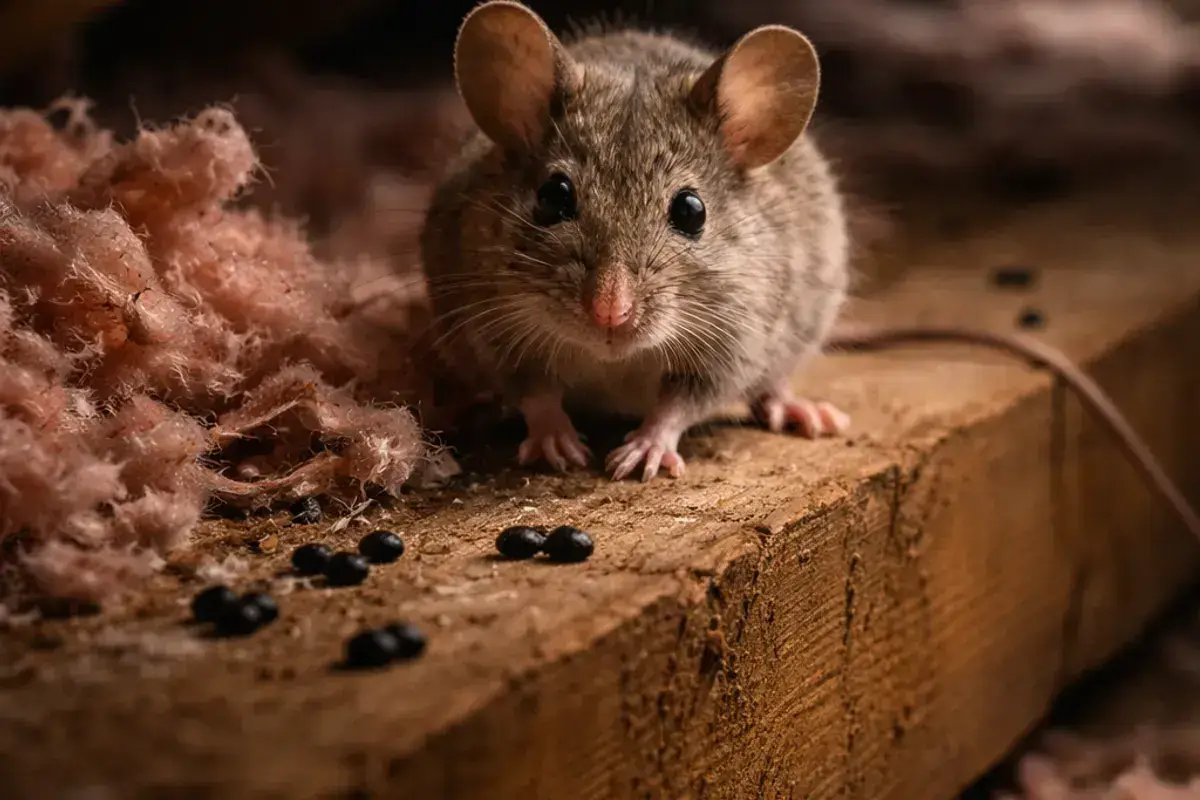
Food contamination is routine in active homes — droppings and urine in pantries and cabinets, and chewed packaging that exposes everything near it.
What actually works: Insulation damage is financial damage
Insulation damage is financial damage: tunneled, urine-soaked insulation loses effectiveness and eventually needs replacement by the zone.
The Smyrna angle: Allergen load builds quietly
Allergen load builds quietly — dander, droppings dust and nesting material in the air pathways above living spaces aggravate sensitive lungs.
For Smyrna homeowners reading about are mice in the house dangerous?, the practical next step is usually a mouse inspection that maps entry points before any treatment is chosen — the same inspection-first standard behind recommended local mouse exterminators in Smyrna. If the problem is already loud, skip ahead to emergency mouse removal.
Mistakes to avoid: Disease risk in Georgia is real but should be kept in proportion
Disease risk in Georgia is real but should be kept in proportion: bacterial contamination is the everyday concern, handled by proper cleanup method.
When to call a professional: The risk curve is time
The risk curve is time: a week-old problem and a year-old colony are not the same exposure, which is why early calls are the cheap, safe ones.
Questions Readers Ask
Are mice in the house dangerous?
Yes — mice in a house are a genuine risk, mainly through three routes: they chew wiring insulation, which is a recognized fire hazard; they contaminate food and surfaces with droppings and urine; and they damage insulation and stored belongings as they nest. The full explanation sits at the top of this guide, with the Smyrna-specific detail in the sections below.
When should a Smyrna homeowner stop DIY and call?
On the question of are mice in the house dangerous? — when sign keeps appearing after two weeks of your own traps, when activity is in walls or ceilings you cannot reach, or when droppings keep returning — that pattern means entry points are open, and only inspection plus sealing closes the story.
Does this apply outside Smyrna?
This guide answers "Are mice in the house dangerous?" The mouse behavior in it is Georgia-wide, but the housing and seasonal details are written for Smyrna — its ranch stock, tree canopy and cold-snap pattern. The principles travel; the specifics are local, deliberately.
Keep reading on this topic: the guide to Why Mouse Poison Backfires: Dead Mice, Wall Odor and Flies follows naturally from Are Mice Dangerous? The Real Risks Inside a Smyrna Home. When reading turns into needing, the contact page explains exactly what happens when you call.
Reading About Mice Is Step One. The Inspection Is Step Two.
If this guide describes your house, a ground-to-roof inspection turns reading into a plan — with a written quote.
(770) 555-0147 Call Now